
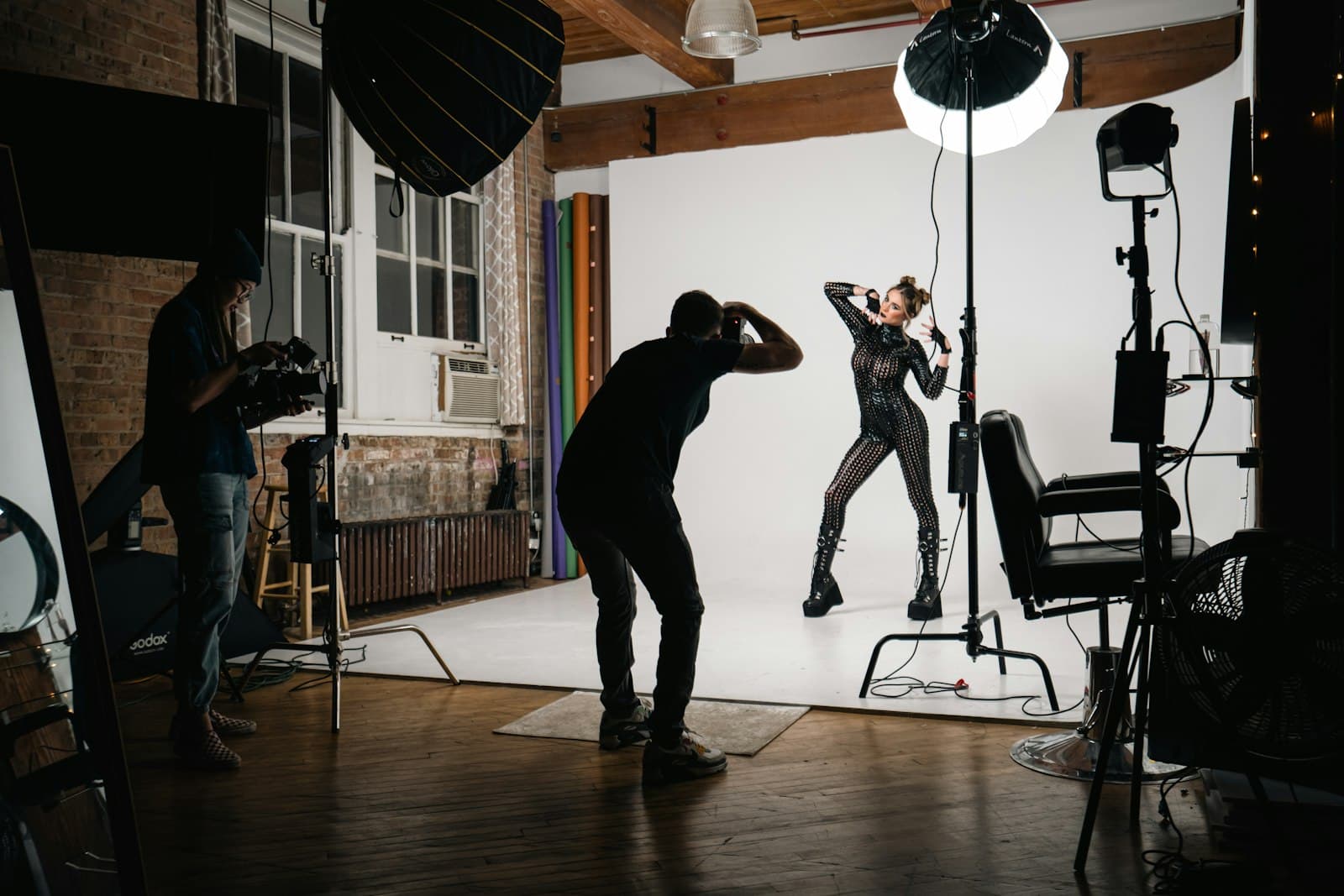
Portraits are the most-generated subject in AI art and the easiest to get wrong in a boring way. Type "portrait of a woman" and you'll receive the averaged face of the internet: front-lit, centered, pleasant, forgettable. The difference between that and a portrait someone stops scrolling for is not the model — it's specificity about four things: the subject, the light, the framing, and the style.
Every prompt below follows that four-part shape, and every one runs as-is in Imageny's image generator. Copy what's close to your idea, then swap the parts.
What makes a portrait prompt actually work?
The formula behind all 25 prompts:
[framing] portrait of [specific subject], [lighting], [style keywords]
Two of the four parts do more work than people expect. Lighting is the difference between a passport photo and a painting — "lit from the left by a window" transforms the same face. Framing decides intimacy: an extreme close-up and a waist-up shot are different genres. Subject specificity matters too — "an elderly fisherman with sun-weathered skin" beats "an old man" every time, because detail gives the model something to commit to. More on why this works in our prompt-writing guide.
Photorealistic portraits
close-up portrait of an elderly fisherman with sun-weathered skin and pale grey eyes, overcast daylight, shallow depth of field, 85mm lenswaist-up portrait of a young chef in a steam-filled kitchen, warm tungsten light from one side, candid expression, documentary photographyportrait of a woman with silver locs and gold-rimmed glasses, studio lighting against deep green backdrop, editorial magazine styleclose-up of a boxer between rounds, sweat and dramatic top light, dark background, high contrast black and white photographyenvironmental portrait of a florist framed by hanging dried flowers, soft morning window light, muted earth tones
The lens and lighting vocabulary ("85mm", "top light") is what pushes these toward photography rather than illustration — the photorealistic style page pairs well with all five.
Painted and classical portraits
oil painting portrait of a stern noblewoman in dark velvet, chiaroscuro lighting, Rembrandt style, cracked varnish texturewatercolor portrait of a child laughing, loose wet-on-wet washes, white paper showing through, minimal detail outside the facegouache portrait of a jazz musician with a saxophone, limited palette of indigo and amber, visible brushworkrenaissance-style portrait of a modern woman in a hoodie, formal three-quarter pose, dark background, subtle humor in the anachronismimpressionist portrait of a gardener at dusk, broken color, thick impasto strokes, warm fading light
Number 9 shows a trick worth stealing: collide a classical format with a modern subject and the tension carries the image.
Anime and stylized portraits
close-up portrait of a white-haired anime swordsman with a scar over one eye, 90s cel anime style, dramatic side lightingsoft anime portrait of a girl with headphones in a rainy bus window seat, muted pastel palette, lofi aesthetic, reflections on glasschibi portrait of a witch with an oversized hat and a tiny black cat, thick outlines, flat pastel colors, sticker stylecyberpunk anime portrait of a netrunner with glowing cybernetic eyes, neon pink and teal rim light, dark rain-slick backgroundmanga-style portrait of a delinquent schoolboy, black and white ink, screentone shading, intense stare
If the anime direction is your lane, the portrait style page and our anime PFP guide cover avatar-specific framing.
Character and fantasy portraits
portrait of an orc librarian with reading glasses and tusks, warm candlelight, shelves of ancient books behind, gentle expressionportrait of a desert nomad queen with intricate face tattoos, harsh noon sun, wind-blown veil, cinematic color gradeclose-up of a frost elf with cracked porcelain skin, cold blue light from below, breath visible, dark fantasy styleportrait of a steampunk airship captain, brass goggles pushed up, golden hour through cabin windows, weathered leatherportrait of a plague doctor removing the mask, one eye visible, candlelit, oil painting texture, unsettling calm
Experimental portraits
double exposure portrait of a woman and a pine forest, silhouette blend, misty white backgroundportrait made of stained glass, saint-like pose, sunlight streaming through the colored paneslow-poly 3D portrait of a fox-headed businessman, flat studio background, pastel color blockingportrait of an astronaut with the helmet visor reflecting a nebula, face barely visible, deep blackscontinuous single-line drawing portrait of a dancer, one unbroken black line on cream paper, one red accent
How do you turn one prompt into a series?
Pick one prompt and change exactly one part per generation: same subject through five lighting setups, or same lighting across five subjects. Because only one variable moves, you learn what each part contributes — and you end up with a coherent series instead of 25 orphans. Batch generation in the playground makes each variation a single click, and a fixed seed keeps the comparison honest.
Generate your first three
Choose the prompt closest to a character you already care about, swap in their details, and run it in the image generator. Then run it twice more with different lighting. Of the three, one will surprise you — and that's the one that teaches you what your next prompt should say.
Cover photo by Lana Mattice on Unsplash.