
"Anime style" isn't one style. A chibi sticker, a gritty seinen manga panel, and a neon cyberpunk keyart are all anime — and prompting an AI generator with just "anime" leaves the most important decision to chance.
This guide breaks down the seven looks people actually mean when they say "anime," and the keywords that reliably reproduce each one. Every style below has a dedicated page in our styles library with live examples.
What are the main anime art styles?
Classic anime (cel style)
The look of 90s and 2000s TV anime: clean lineart, flat cel shading with hard shadow edges, expressive eyes. It's the safest default for character art.
Prompt keywords: 90s cel anime style, clean lineart, flat shading, film grain. See the anime style page for examples.
Manga
Black and white, defined by screentones, hatching, and dramatic panel-style compositions. Great for storytelling moments and covers — the absence of color pushes all the drama into contrast and linework.
Prompt keywords: black and white manga style, screentone shading, ink lineart, speed lines. More on the manga style page.
Chibi
Characters compressed into big-headed, small-bodied proportions — roughly 1:2 head-to-body — with simplified features and oversized emotions. The go-to for stickers, emotes, and merch mockups.
Prompt keywords: chibi style, big head small body, thick outlines, flat pastel colors, sticker style. Try it on the chibi style page.
Cyberpunk anime
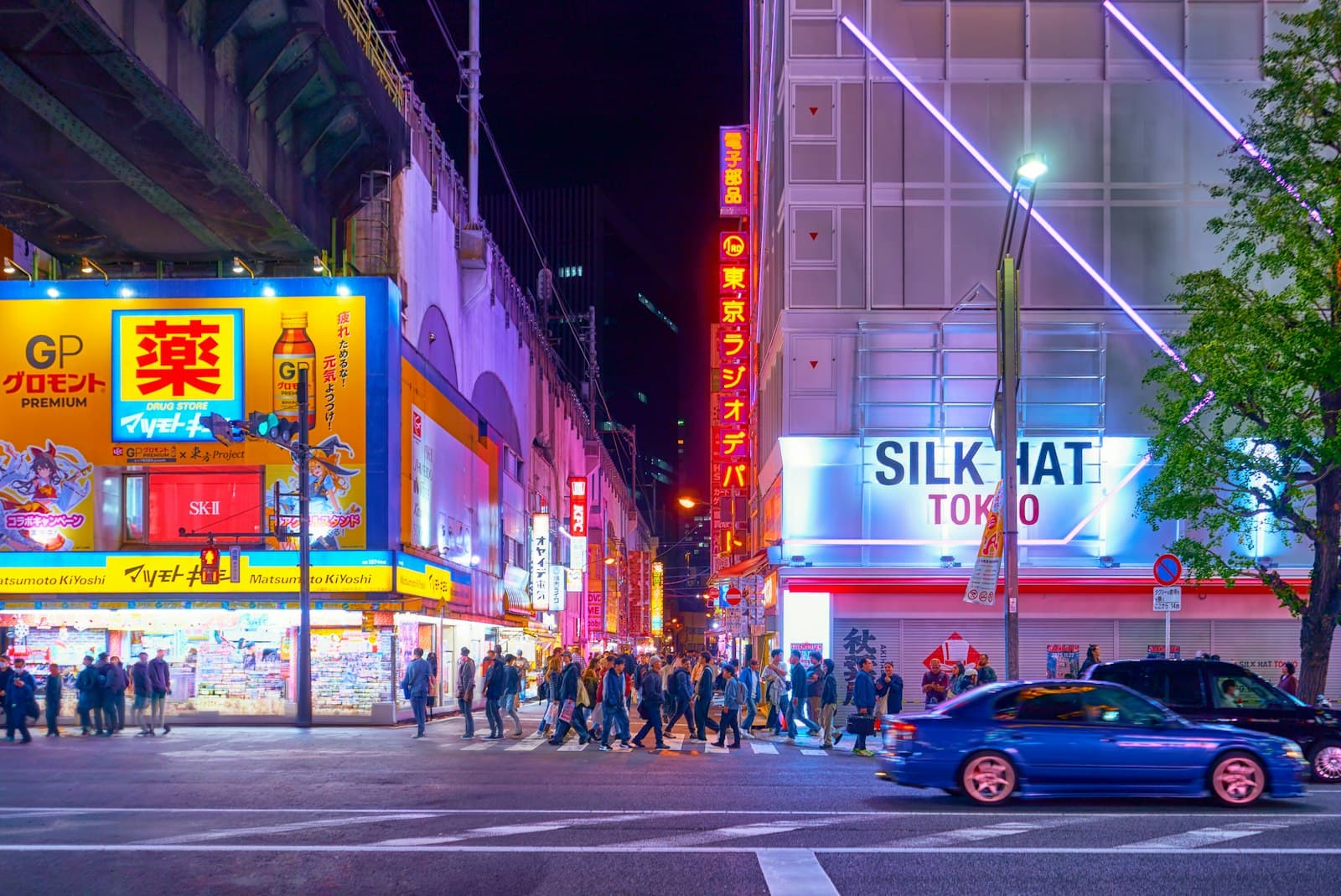
Anime characters in rain-slicked neon cities: purple-teal palettes, holographic signage, rim lighting. The style leans on environment and lighting as much as character design, so give it both.
Prompt keywords: cyberpunk anime style, neon rim lighting, rainy night street, purple and teal palette. Examples on the cyberpunk style page.
Watercolor anime
Soft edges, visible paper texture, colors that bleed into each other — the Ghibli-adjacent look. It flatters landscapes, quiet scenes, and emotional moments more than action.
Prompt keywords: anime watercolor style, soft washes, muted palette, paper texture. See the watercolor style page.
Mecha
Hard-surface machinery: panel lines, decals, dramatic low angles, scale cues like tiny pilots or city skylines. Precision matters here, so keep prompts literal and mechanical.
Prompt keywords: mecha anime style, hard surface detail, panel lines, dramatic low angle, hangar lighting. More on the mecha style page.
Pixel-art anime
Anime characters rendered in deliberate low resolution — 16 to 32-bit sprites, limited palettes, chunky dithering. Nostalgic by design and perfect for game assets and avatars.
Prompt keywords: anime pixel art, 32-bit sprite, limited palette, dithering. Try the pixel-art style page.
How do I choose the right style for my project?
Match the style to the job, not the other way around:
- Character portraits and avatars → classic anime or watercolor
- Stickers, emotes, reaction images → chibi
- Covers, dramatic story beats → manga
- Worldbuilding and keyart → cyberpunk, mecha, or fantasy
- Game assets → pixel art
When in doubt, generate the same subject in two styles and compare — with the same seed subject description, a style swap takes one word change.
Can AI really reproduce these styles accurately?
Yes — if the style is named precisely. "Anime" alone averages everything above into a generic look. "90s cel anime with flat shading" or "black and white manga with screentones" gives the model a target it can actually hit. That's the whole trick, and it's also why our prompt guide treats style as a required part of every prompt.
Generate your first style study
Pick a style above, open the playground, and run the same character through two different styles — it's the fastest way to develop an eye for what each one does. Pick a plan or a credit pack when you sign up and you're ready to generate.
Cover photo by Jezael Melgoza on Unsplash.